Starting a Community Allotment in Fenland: A Beginner's Guide
How to find land, raise money and organise a community allotment in Fenland, from the first meeting to the...

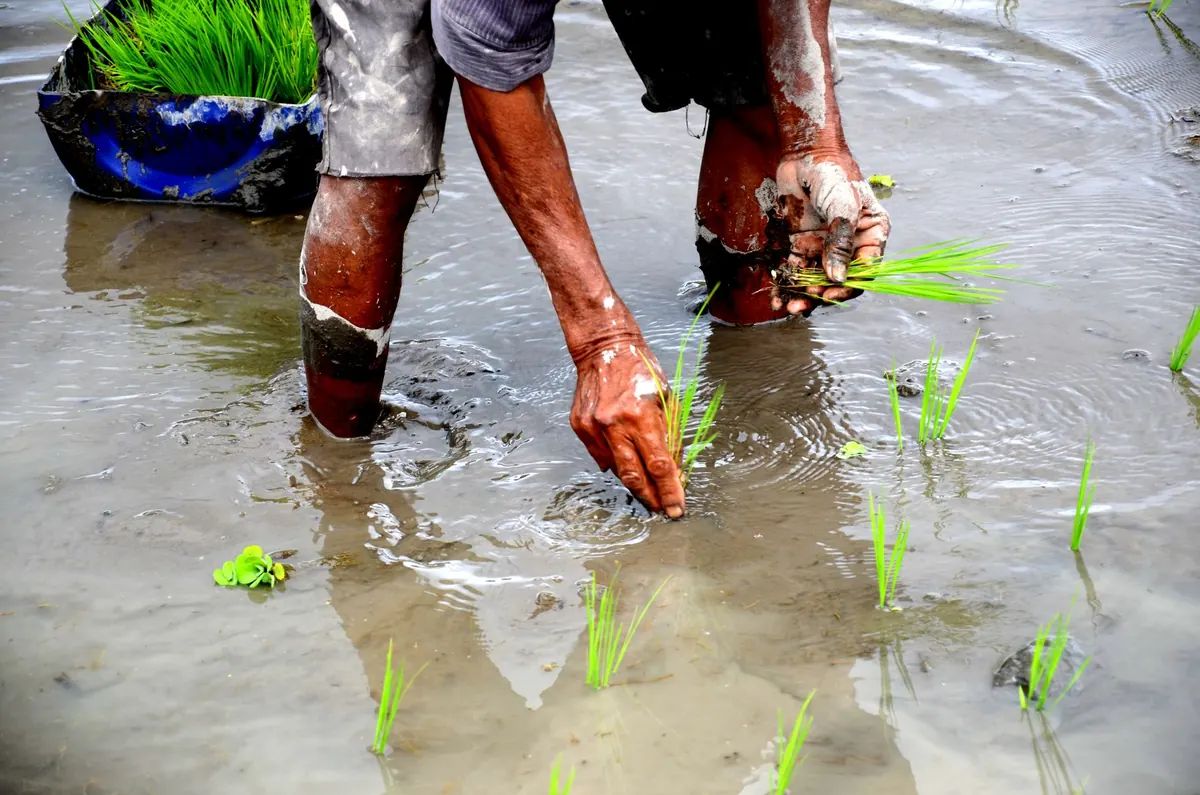
Fenland growers talk about soil the way other people talk about the weather. It decides what goes in the ground, when you can get a tractor onto the field, and whether the crop is worth harvesting at all. And across the Fens, two words do most of the work: peat and mineral. Get that distinction right and you are most of the way to knowing what will grow where you stand.
The Fens were built by water. Peat formed where waterlogged ground let reeds, sedges and alder carr accumulate faster than they rotted, leaving layers of dark organic material. Mineral soils formed where tidal rivers and the sea laid down silt, clay and sand. That is the whole story in one sentence, and you can still read it in a handful of soil.
The practical dividing line is organic matter. Soils that are mostly decomposed plant material are peat; soils made mostly of mineral particles are not. In between you get peaty and humose soils, which behave like a blend of the two and often catch people out.
A quick field test: take a moist handful and squeeze. Peat feels spongy, is light for its volume, and rarely feels gritty. Mineral soil feels either silky (silt), sticky and mouldable (clay) or obviously gritty (sand). Colour helps too, but it misleads — some very dark mineral soils are not peat at all.
The black fens in the middle of the region are the classic peat ground. These soils warm quickly in spring, work up into a fine tilth without much effort, and hold moisture well when managed properly. Organic matter releases nitrogen through the season, which is one reason crops on fen peat can look so strong so early.
The catch is that drained peat is always changing. Once air reaches it, the organic matter oxidises and the surface wastes away, so land levels drop over decades and the soil you farm is not quite the soil your predecessor farmed. Over-drainage makes it worse. Peat also blows in dry spring winds, and it smears and compacts if you work it when it is too wet. Let the surface dry out hard and it can become difficult to re-wet.
On pH, fen peat generally sits neutral to slightly acid, though where it lies over calcareous deposits it can run neutral to alkaline. Test rather than assume.
Most of the Fenland margin is mineral ground, and it is far from uniform.
The silty fens of south Lincolnshire and west Norfolk are some of the most productive vegetable soils in the country. They are silky to the touch, easy to work, hold moisture reasonably well and drain freely enough to carry machinery. Many are calcareous, with a pH that sits well above neutral, which suits some crops and rules out others.
Heavier ground is slower to drain and slower to warm in spring, and it will punish you for rushing. Handled well, it grows reliable wheat, beans, oilseed rape and grass, and it holds on to nutrients better than lighter land.
Light, droughty and quick to dry out, these soils need irrigation to earn their keep, but they produce clean root crops and are easy to work almost year-round. Wind erosion is a real risk on bare, fine sandy ground in spring.
Peat rewards high-value field vegetables that want moisture-retentive soil and a fine seedbed.
Two cautions. Potatoes and other root crops can scab on alkaline peat, so check pH first. And because peat is light, windblown soil can strip a newly drilled field in a single dry, gusty week — keep cover on the ground where you can.
Treat each field on its own merits. A holding can run from black peat to silt within a few hundred metres, and a cultivator setting or a drilling date that suits one will not suit the other.
On peat, the priorities are keeping cover on the soil, avoiding unnecessary drainage, and working it only when conditions are right. Think in decades as well as seasons — wastage is slow but relentless, and it changes what the land can do.
On mineral ground, the priorities are structure and organic matter. Compaction on clay and silty land costs yield for years, and adding organic matter to light sandy soils pays back steadily in moisture retention and workability.
If you are planning a new venture — a change of crop, a new block, an irrigation scheme — get a soil analysis and talk it through with a local agronomist or a soil testing laboratory before you commit. They will know the quirks of your corner of the Fens far better than any general guide can.
Photo: Danang DKW / Pexels
How to find land, raise money and organise a community allotment in Fenland, from the first meeting to the...
A month-by-month guide to Fenland farmers' markets, from spring rhubarb and asparagus to autumn potato...
A practical Fenland guide to spotting invasive plants and animals in local drains and rivers, recording...