Starting a Community Allotment in Fenland: A Beginner's Guide
How to find land, raise money and organise a community allotment in Fenland, from the first meeting to the...

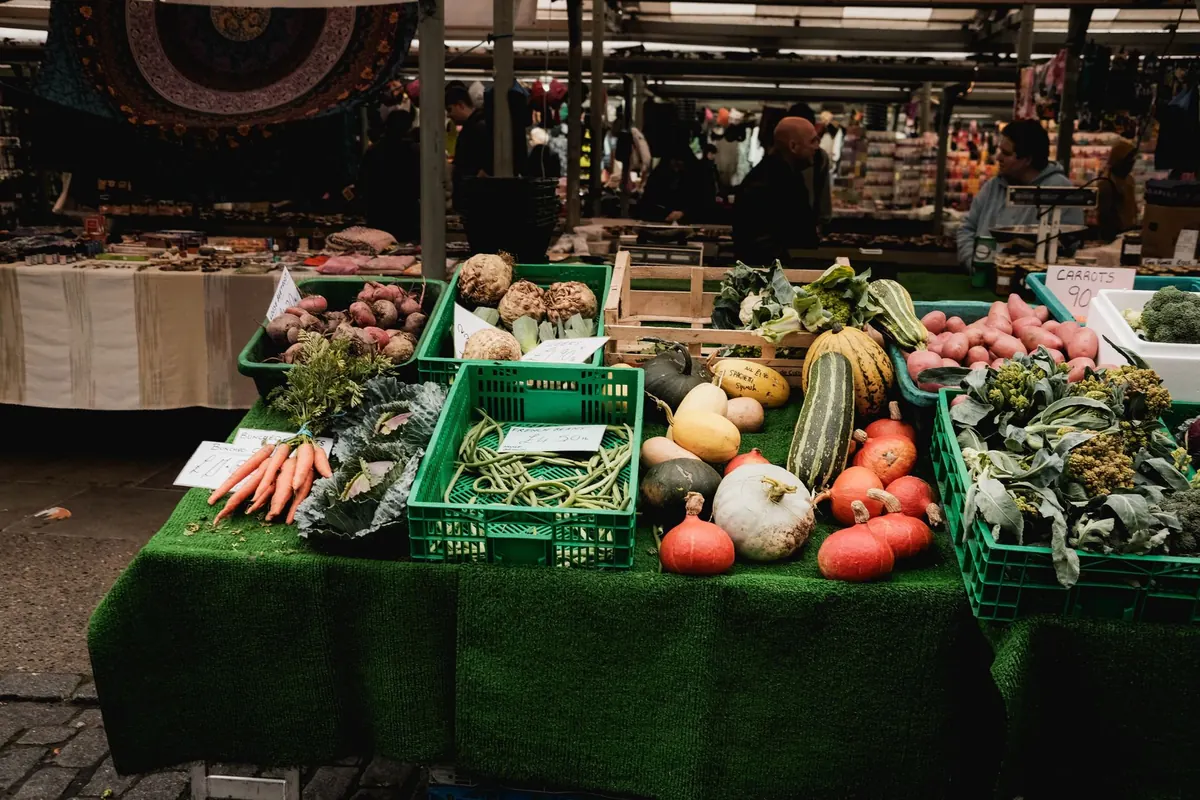
The Fenland market season does not begin on a date in the diary. It begins when the first punnets of strawberries land on a trestle table in a town square, and it winds down when the last sacks of maincrop potatoes and strings of onions are cleared away. In between, the tables change almost every week.
That is the pleasure of shopping this way, and also the difficulty. Turn up in April expecting tomatoes and you will go home disappointed. Turn up in September with a big bag and a plan, and you can fill a freezer, a store cupboard and a shelf in the shed.
What follows is a rough guide to the Fenland year as it appears on market stalls — what is genuinely in season, what is worth buying in quantity, and when to make the trip.
The Fens grow a great deal of Britain's vegetables, and the reasons are under your feet: deep black peat and silt that holds moisture and warms up early. That is why the region's markets can be generous from late spring onwards, and why a stall in Ely, Wisbech, March, Chatteris, Whittlesey or Downham Market can look completely different in June and October.
Outdoor crops follow the weather, so no two years are identical. A cold, wet spring can push everything back a fortnight; a warm April can bring asparagus forward by the same amount. Treat any calendar, including this one, as a guide rather than a timetable, and check local listings or a parish noticeboard for market days, which vary from town to town.
It also helps to know what kind of stall you are standing at. Some traders grow what they sell. Others buy in from wholesale markets and resell. Neither is dishonest, but only one can tell you the variety, the field it came from and how long it has been sitting there. A simple question — "Did you grow this yourself?" — is not rude. Most growers enjoy answering it.
March to May is the hungry gap, the stretch when the store cupboard is emptier than the field. What you will find is honest winter food finishing off: purple sprouting broccoli, kale, leeks, parsnips that have sweetened in the frost, swede, celeriac and apples from last year's store. Forced rhubarb arrives early, with outdoor rhubarb following from April.
Under cover, growers bring salad leaves, radishes, spring onions, spinach and chard to market weeks before anything in the open ground is ready. Asparagus appears from late April and runs into early June — a short window, so if you see it cheap in July, ask where it came from.
Late May into July is the stretch most people wait for. Strawberries come first, then gooseberries, blackcurrants and raspberries, alongside broad beans, peas and the first new potatoes. This is the point in the year when a market trip stops being about topping up and starts being about carrying home more than you planned.
Choose strawberries by smell as much as by sight. A good punnet smells of strawberries before you get it near your face. Small, dark red fruit generally beats large, pale fruit, because it was picked closer to ripe. Do not wash them until you are about to eat them, and plan to eat them within a day or two — ripe fruit does not keep.
By late July and August the tables are heavy. Courgettes, runner beans, French beans, cucumbers, tomatoes, beetroot, carrots, fresh onions and sweetcorn, with plums and cherries from the orchards. Sweetcorn is worth buying on the day you plan to eat it; the sugar starts turning to starch quickly once it is picked, which is why market corn tastes so different from the supermarket version.
This is the time to buy in quantity rather than by the handful. Beans freeze well if you blanch them briefly and cool them in cold water first. Courgettes and tomatoes turn into chutney, passata and soup. If you are preserving anything, follow a tested recipe from a recognised source rather than improvising, particularly with anything bottled or canned.
September to November is when the Fenland market does what it does best. Maincrop potatoes, onions for storing, squash, apples, pears, cabbage, leeks, celeriac, beetroot and — from late October — the first sprouts. Prices are at their most reasonable and quality is at its peak, which makes it the sensible time to buy in bulk.
January and February are the thinnest months, and that is a feature rather than a fault. What turns up is leeks, kale, sprouts, cabbage, parsnips, swede, stored potatoes and onions, apples from store, and squash from an autumn haul. Late in the season, forced rhubarb appears again and signals that the year is turning.
If a stall looks sparse in midwinter, it usually means the person behind it is selling what they actually grew. That is worth supporting through the lean weeks, because those are the traders who will still be there with peas and strawberries in June.
The most useful habit is a rhythm rather than a big annual stock-up: one market trip a fortnight, one bulk buy each time, and a freezer that gets filled in August and emptied by February. Go for a walk around the whole market before you spend anything, so you know what is on offer before you commit.
If you are planning to preserve, bottle, or store food in any quantity, follow tested recipes and current guidance from a recognised food safety source — home preserving is straightforward when the rules are followed and unpredictable when they are not.
And keep the calendar loose. The Fens will give you asparagus in May, strawberries in June, beans in August and potatoes in October, but they will not do it to order. That unpredictability is half the reason the market is worth the trip.
Photo: Airam Dato-on / Pexels
How to find land, raise money and organise a community allotment in Fenland, from the first meeting to the...
A practical Fenland guide to spotting invasive plants and animals in local drains and rivers, recording...
A practical beginner's guide to stargazing in the Fens, with dark sky spots, kit advice and what to look...