Fenland Farmers' Market Season: What to Buy and When
A month-by-month guide to Fenland farmers' markets, from spring rhubarb and asparagus to autumn potato...

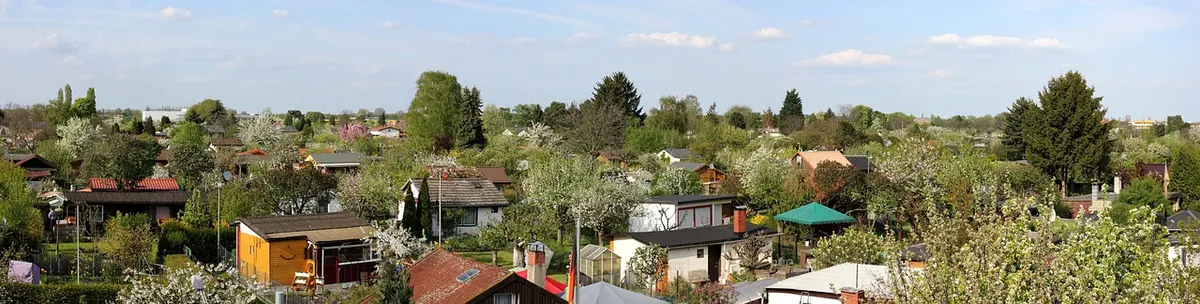
Ask around any Fenland village and you will hear the same story: more people want a growing space than there are plots to go round. Council waiting lists run long, and a traditional ten-rod allotment is more ground than many households can keep on top of alone. That is why community allotments have taken root across the Fens — a shared site with a shared water supply, a shed of communal tools, and a rota that means the beans still get watered when you go away for a fortnight. Setting one up takes patience and a fair bit of paperwork. None of it is complicated, and much of it has been done before by people a few villages away.
It is tempting to go looking for a field straight away. Resist that for a month or two. Councils, landowners and funders all want to know who will be using the site and how many of them there are. A site with no group behind it is just an empty field.
Find four or five people who will reliably turn up to meetings. Book a back room in a pub, or the village hall on a Tuesday evening, and work out which of three broad models suits you:
Then test the demand properly. A note in the parish newsletter, a post in the village Facebook group, a poster in the shop window and a word at the school gate will tell you within a few weeks whether you have ten interested households or fifty. Ask what people actually want while you are at it. A family with small children, a retired couple, a shift worker and someone who uses a wheelchair will all need something different from the layout, and it is far easier to design that in from the start than to retrofit it later.
The parish council is almost always the first call. Parish councils hold or lease more land than most people realise — an awkward corner of the playing field, a strip behind the cemetery, ground next to the village hall. Send a short letter rather than an email essay, ask to speak at a meeting, and turn up with a rough plan and a list of names.
Fenland District Council is the next stop. Ask what land it holds in your area, whether any of it is suitable, and what it offers in the way of community asset transfer. There is legislation — the Allotments Acts of 1908 and 1925 — about councils providing allotments where there is demand from residents. If you think it applies to your situation, put the question to the council in writing, and take proper advice before turning it into a campaign. A friendly clerk is worth more than a fight.
Beyond the councils, look at church land, school grounds, a farmer with an awkward triangle beside a dyke, land behind a pub, or a derelict yard. Approach the owner with a one-page summary: who you are, how many households are involved, what you plan to grow, and how you will look after the site.
Whatever you agree, get it in writing. A straightforward tenancy agreement or licence setting out the term, the rent, the water arrangements and who maintains what will save an enormous amount of argument. For anything longer than a couple of years, or anything involving a large sum of money, pay for proper legal advice.
Starting costs are usually modest: a water connection or a standpipe, a lockable store, some tools, a mower, a first aid kit, and public liability insurance, which most landowners will insist on. Ongoing costs are smaller still — water, insurance and the odd repair.
Income can come from small annual membership fees, a rent per bed, plant sales on the village green, a coffee morning, or a quiz night. Grants worth chasing include the National Lottery Community Fund's smaller programmes, district and parish council community grants, and local charitable trusts; check current eligibility and closing dates each time, because they change. Local businesses often prefer to donate materials than cash — timber, topsoil, fencing, a skip. Tree surgeons will often tip woodchip for free if you have somewhere to put it, and Freegle and similar sites turn up tools, pallets and water butts regularly.
Keep the finances simple and open. A separate bank account with two signatories, a written record of what came in and what went out, and an annual summary shared with members will keep trust intact and make future grant applications much easier. For anything involving charity registration, leases or larger sums, take professional advice.
You do not need to become a bureaucracy, but you do need a few things in place before the first spade goes in. A short constitution — model versions are easy to find and adapt — sets out what the group is for and how decisions are made. Elect a chair, a treasurer and a secretary, even if the same three people do most of the work. Write down the rules that matter: how plots are allocated, what happens if someone stops turning up, how tools are borrowed and returned, and how disagreements are settled.
Add a simple risk assessment covering water, tools, bonfires and children on site, put a first aid kit in the store, and be sensible with members' contact details — collect only what you need, keep it secure, and use it for allotment business only. If young people or volunteers are involved regularly, think about safeguarding before someone asks you about it.
Fenland soil is a gift: deep, dark and fertile, and it will grow brassicas, onions, beans and potatoes with enthusiasm. It also blows about in a dry spring, dries out fast, and sits in flat, open ground where wind and late frosts do their worst. Plan for that from day one.
Plant a windbreak — a hedge, a line of willow, or netting on posts — before you worry about the perfect bed layout. Sort water early, with a trough, standpipe or a run of water butts off the shed roof, and mulch heavily to hold moisture in. Raised beds make life easier for anyone with a bad back or a wheelchair, and no-dig beds suit members who can only manage short visits.
Above all, start small. Half a site cultivated well beats a whole site lost to weeds. Mark out paths first, cover the rest with cardboard and mulch, and bring new ground into use a bed at a time. Sow something easy and quick in the first season — salads, radishes, broad beans — so that everyone sees a result.
Community allotments rarely fail for lack of enthusiasm; they fail when the same two people do everything. Share the load with a rota for watering, mowing and opening up, and fix one regular work morning a month so people know when to turn up. Keep a noticeboard with jobs, a welcome pack for new members, and a buddy system that pairs a newcomer with someone who has grown before. Review the rules once a year, in the quiet weeks, while everyone is still speaking to each other.
The rest follows from there. If you get stuck, talk to an established allotment association nearby — most are happy to share what they learned the hard way.
Photo: javallma / Pixabay
A month-by-month guide to Fenland farmers' markets, from spring rhubarb and asparagus to autumn potato...
A practical Fenland guide to spotting invasive plants and animals in local drains and rivers, recording...
A practical beginner's guide to stargazing in the Fens, with dark sky spots, kit advice and what to look...