Starting a Community Allotment in Fenland: A Beginner's Guide
How to find land, raise money and organise a community allotment in Fenland, from the first meeting to the...

Fenland farms inherit an awkward mix of soils. One field is black peat that will move in a March wind if it is left bare; the next is silt that holds moisture like a sponge and dries hard in a rainless June. A rotation that suits one can quietly ruin the other. Add the shift away from mixed livestock holdings towards specialist vegetable and arable units, and the question of what follows what has become the central decision on many farms — part agronomy, part business planning. Here is how the old and new approaches compare, and how to choose between them.
Four pressures shape every decision here. Peat wastes away when it is drained, cultivated and left bare, so anything that keeps soil covered earns its place. Wind erosion takes the top few centimetres of a dry peat field in a single gusty afternoon, and those centimetres are the most productive part. Silt soils behave differently: they slake, cap and slump if traffic goes on them wet, and they carry the worst grass weed burdens on the farm.
Then there is the disease legacy. Clubroot, potato cyst nematode, beet eelworm, white rot in onions and free-living nematodes in carrots all survive in the soil far longer than most rotations allow. On top of that, late frosts and slow spring warm-up on peat restrict which crops can be drilled early. A rotation is really a plan for managing all of this at once.
The classic Fenland system was long and mixed. Five, six or seven years, with a grass or clover ley, roots for cleaning the land, cereals for cash and straw, and livestock to convert the whole thing into muck. On peat, potatoes, wheat, sugar beet and barley often shared the rotation with a ley and a fallow year.
Its strength was biology. Long breaks starved soil-borne problems, the ley rebuilt structure on silt and gave the peat a rest, and grazing livestock returned organic matter. Weeds were managed by cultivations, competition and cutting rather than by chemistry alone.
Its weakness was pace. Leys earn little, livestock tie up labour and capital, and a seven-year rotation cannot respond when a buyer wants more onions or the beet contract shifts. That is not nostalgia material — it is a set of principles worth borrowing selectively.
Most Fenland businesses now run three to five years of cash crops: potatoes, wheat, sugar beet, wheat; or onions, wheat, carrots, barley. Cover crops, minimum tillage, controlled traffic, soil sampling by zone and variable-rate applications have replaced much of the guesswork. Gross margins per hectare are far higher, and timeliness is better.
The cost is pressure. When the same profitable crops come round every third or fourth year, soil-borne disease builds steadily and yields slide before anyone notices. Potatoes and sugar beet close together will feed nematode populations; onions following onions or leeks invites white rot; brassicas in a tight loop make clubroot permanent. Short rotations also leave less room for a proper break crop, which is where soil structure on silt begins to suffer.
On peat, the priority is keeping the surface covered from harvest to spring drilling. A cereal, rye or vetch mix sown early enough to establish before the cold will hold the soil against wind and take up leftover nitrogen. Avoid deep cultivation where you can: the more you stir and aerate peat, the faster it oxidises and shrinks. Shallow establishment and controlled traffic slow that loss.
Grass leys are trickier here than on mineral soil. They still rest the land and help with weeds and structure, but they do not rebuild peat in the way that muck or compost will. Where you can get organic material — compost, digestate, well-rotted manure — spreading it on the fields that need it most is one of the few ways to replace what wastage takes.
Most successful Fenland rotations are hybrids. They keep the modern model's precision, timeliness and cover cropping, and borrow the traditional system's long breaks, leys and organic matter wherever the margin allows. Start with the one field that always disappoints you, stretch the gap between its demanding crops, and get something growing there over winter. Do that in a couple of places and the rest of the rotation usually becomes obvious. If you are making significant changes to a tenancy, to drainage or to long-term cropping plans, it is worth talking them through with your landlord, your agronomist and, where grants or environmental schemes are involved, a qualified adviser.
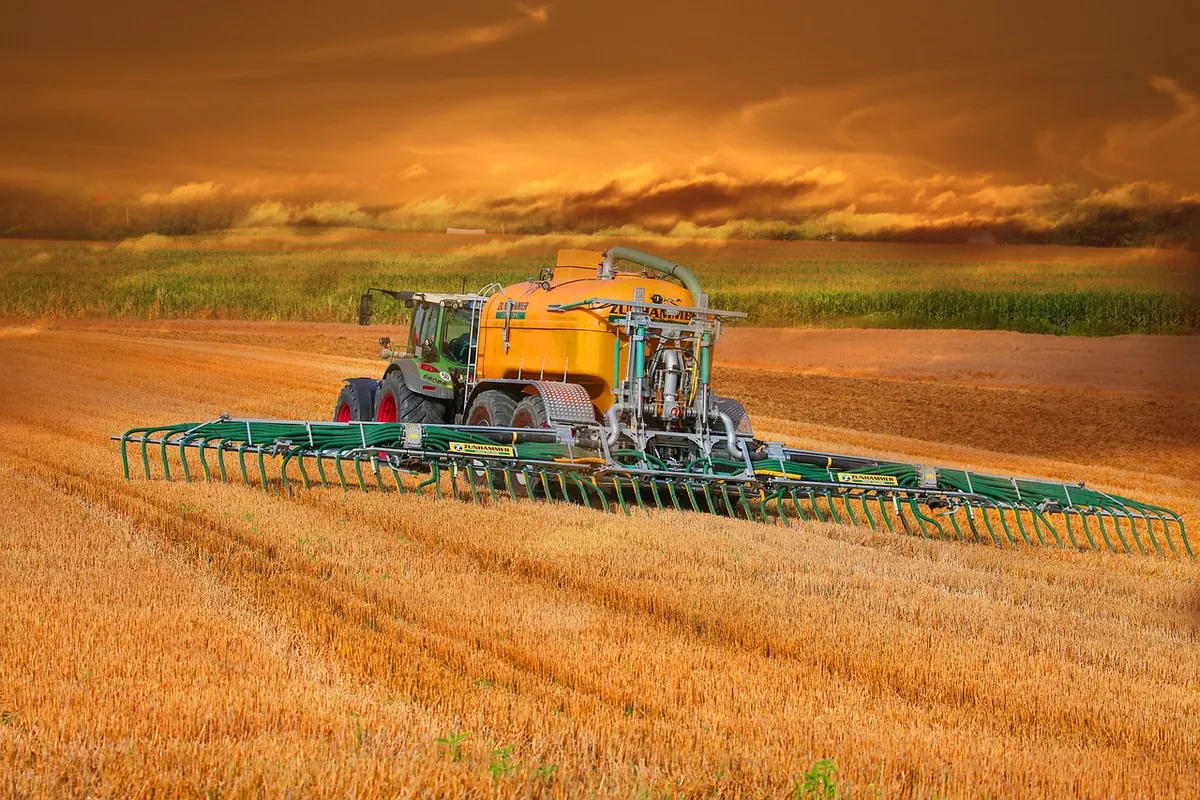
Photo: schauhi / Pixabay
How to find land, raise money and organise a community allotment in Fenland, from the first meeting to the...
A month-by-month guide to Fenland farmers' markets, from spring rhubarb and asparagus to autumn potato...
A practical Fenland guide to spotting invasive plants and animals in local drains and rivers, recording...